
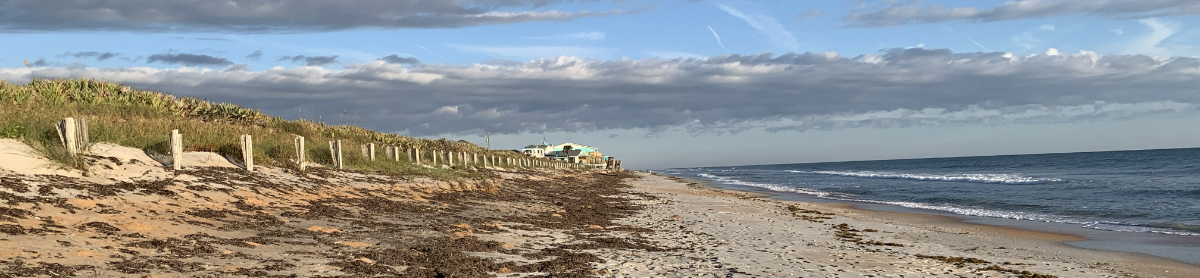

The bivalve seashells, or shells that come in two parts or halves, can be similar in appearance, but not all bivalves are “clams”. I’m not scientifically minded, but I’ve been learning the difference between the shells I collect and photograph.
I’ve gathered some photos of the more common bivalves I see on beaches and in the saltwater rivers around my area of Florida. A general bivalve list includes: clams, oysters, scallops, cockles and mussels.
Clams and Arks
My photos below in this section contain various types of clam shells. Also, there are many types of Venus clams and loads of coquina clams. Shells called “arks” are also clams.

Tagelus clam shell 

big clam shell

Ponderous Ark 
Transverse Arks (Anadara transversa) 
Dosinia clams 
Turkey Wing – ark 
jackknife clam (with pen shells) 
Channeled duckclam


The broad ribbed cardita, measures about an inch in length. 
Spiny Jewelbox
Oysters
I rarely collect oyster shells but we see oyster beds while out on our boat. Oyster shells are sharp, and are the scourge of boaters because they can slice up the underside if a bed is accidentally hit while running. While walking the flats in oyster areas I can hear the shells snapping as they feed.

Oyster Shells 
Oysters among the mangroves 
Oyster bed at low tide
Scallops
Scallop shells can be some of the prettiest shells. Certain types of scallops have one flat side and the other is normal / rounded. The concave part is in the sand or bottom and the flat part is on top and opens like a flap when the scallop is alive. Scallops propel themselves around by opening and closing their shells.
The Kitten Paw and larger Lion’s Paw shells are also scallops. I found these Kitten Paw shells while visiting Sanibel Island on the Gulf coast. I’ve never seen any where I live on the east coast.


2 inches across 
Calico Scallops and one Cross-barred venus clam shell

Kitten’s Paw Scallop Shells
Cockles
Cockles are not clams although they look similar. Because they have an oval shape with high top part (umbo), when a whole cockle is viewed from the side it resembles a heart. For that reason, they are known as the heart shell or heart cockle.


Heart cockle 


yellow pricklycockles 
Yellowish pricklycockle with a piece of a pear whelk turning black

Atlantic Giant Cockle Shell 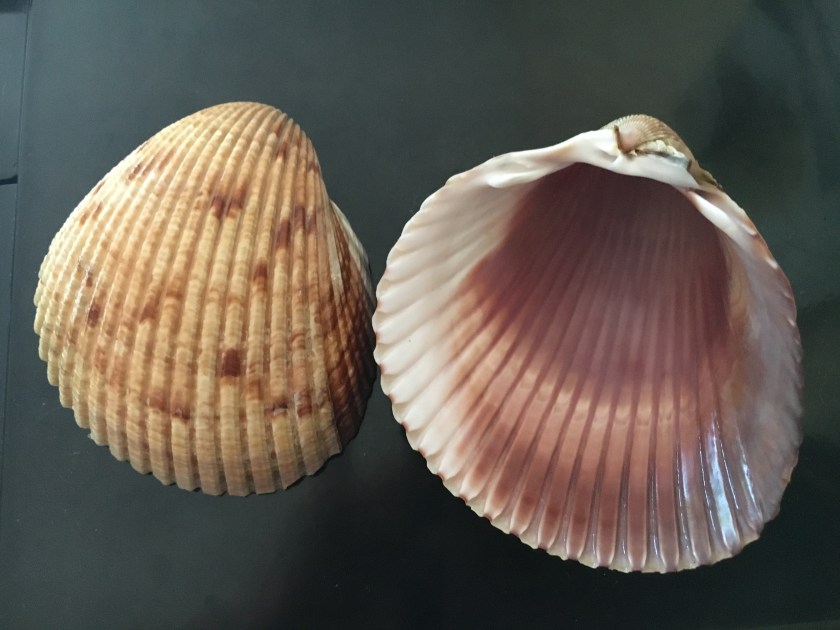
Once cleaned up, the inside of the giant cockle is mauve pink. 
Beautiful coloring on this bivalve
Mussels
Mussel shells are something I rarely collect or photograph because they really are not great looking shells. They are dark colored and shaped like thin fans. The pen shell is distantly related and I have a few pictures here. The pen shell can be nearly a foot in length and is more impressive than a mussel.

Open and empty mussel shell 
Mussel shell

Pen shell next to my son’s foot 
Sawtooth pen shell 
Pen Shells


