

It’s not unusual for stores to sell starfish and other shells to tourists and locals. Coastal communities cater to people who want to decorate with a tropical vibe and beach shells fit that theme. But where did those starfish and seashells come from? In most cases they were collected alive.
 When I traveled to Florida this past summer to visit my son, we visited with some of his friends and enjoyed a swim in their backyard, saltwater pool. Off to the side was a glass table with a bunch of dried starfish, or sea stars, so I took a photo. The home owners were not home, so I didn’t have a chance to ask them where the starfish came from. They were probably purchased, but maybe not.
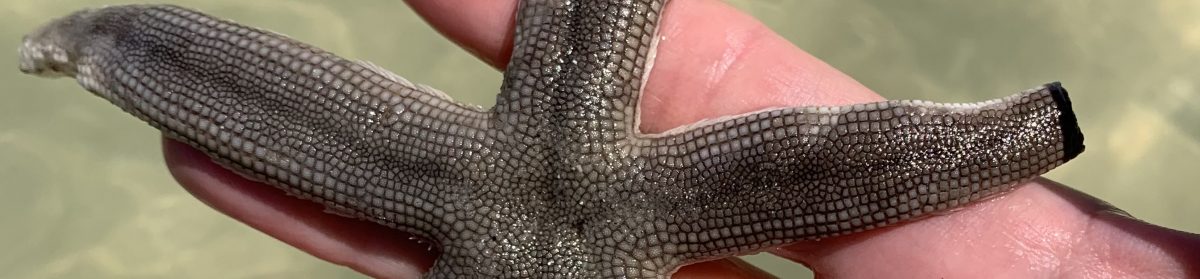
I can’t recall finding sea stars on any of my trips to Florida beaches, until just recently. And those finds were while beach combing on island beaches in the Indian River. First, I found a large Lined Sea Star with a couple of missing legs. Then a few months later I discovered a very tiny starfish in the same general area.
Why You Shouldn’t Collect Sea Stars / Starfish
Sea stars move very slowly. It can be difficult to figure out if they are alive or dead. They feel firm and stiff, but that doesn’t mean they are dead and you can take them home! Unless a starfish is lying in the hot sand, far from the surf, it may still be living. A dead sea star will be totally dried out and brittle. They need the saltwater to live, so one found far from water is most likely dead. However, those are a rare find.
Piles of starfish for sale in a shop were probably scooped up from their habitat and left to die and dry out.
Bottom line: don’t collect them. If you find a sea star out of the water gently put it back near the edge or in a tide pool.
