Collecting Seashells: Grouping the Bivalves

The bivalve seashells, or shells that come in two parts or halves, can be similar in appearance, but not all bivalves are “clams”. I’m not scientifically minded, but I’ve been learning the difference between the shells I collect and photograph.

I’ve gathered some photos of the more common bivalves I see on beaches and in the saltwater rivers around my area of Florida. A general bivalve list includes: clams, oysters, scallops, cockles and mussels.

Clams and Arks

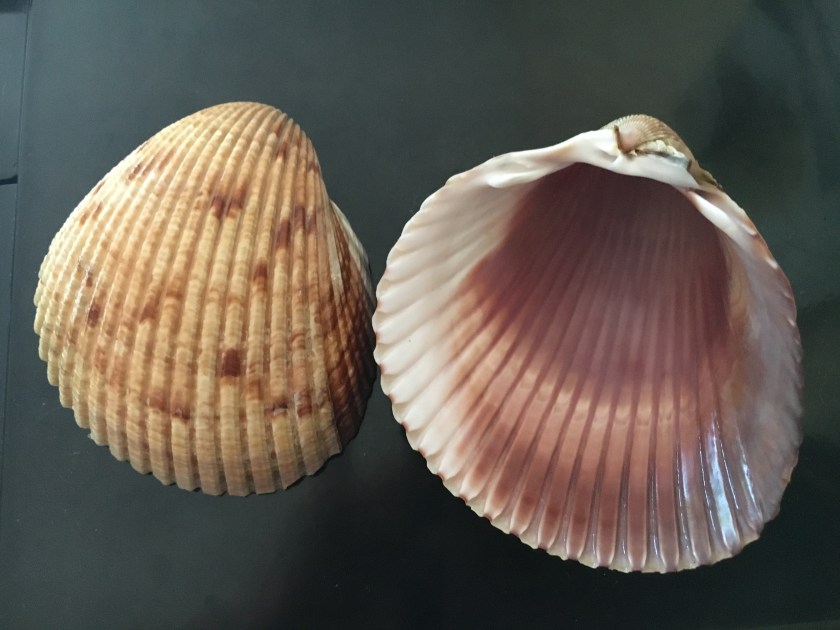
My photos below in this section contain various types of clam shells. Also, there are many types of Venus clams and loads of coquina clams. Shells called “arks” are also clams.

Oysters

I rarely collect oyster shells but we see oyster beds while out on our boat. Oyster shells are sharp, and are the scourge of boaters because they can slice up the underside if a bed is accidentally hit while running. While walking the flats in oyster areas I can hear the shells snapping as they feed.

Scallops

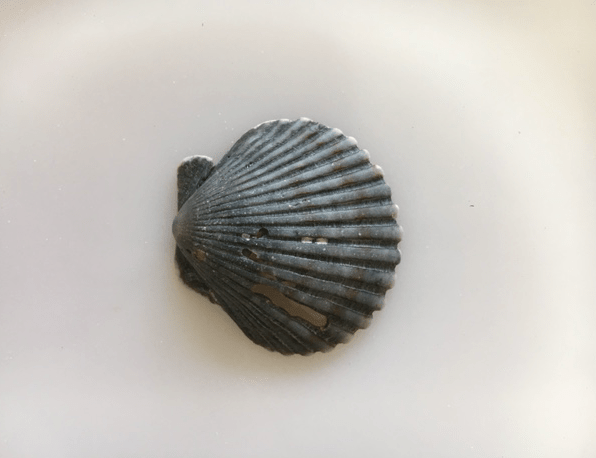
Scallop shells can be some of the prettiest shells. Certain types of scallops have one flat side and the other is normal / rounded. The concave part is in the sand or bottom and the flat part is on top and opens like a flap when the scallop is alive. Scallops propel themselves around by opening and closing their shells.

The Kitten Paw and larger Lion’s Paw shells are also scallops. I found these Kitten Paw shells while visiting Sanibel Island on the Gulf coast. I’ve never seen any where I live on the east coast.

Cockles

Cockles are not clams although they look similar. Because they have an oval shape with high top part (umbo), when a whole cockle is viewed from the side it resembles a heart. For that reason, they are known as the heart shell or heart cockle.

Mussels

Mussel shells are something I rarely collect or photograph because they really are not great looking shells. They are dark colored and shaped like thin fans. The pen shell is distantly related and I have a few pictures here. The pen shell can be nearly a foot in length and is more impressive than a mussel.

Keep Reading! … Newest Posts on This Blog

Back to Gamble Rogers For a Quick October Camping Trip
We took a quick camping trip to Gamble Rogers on the east …
Our Camping Trip to Silver Springs
Our first trip to stay at Silver Springs Campground was a lot …

Gator Bites And Bay Scallops For Lunch

At Goodrich’s Restaurant the other day my son ordered the gator bites appetizer. He said we should order more gator because there are far too many of them around.  Who likes alligators?  They are creepy.  For some reason I don’t like the idea of eating one.  But my son highly recommends them as appetizers.

bay scallops dinner
Bay scallops and lots of fried stuff

I stuck with my bay scallops, which were yummy.  Also on the menu are frog’s legs.  I don’t see myself eating those either.

Goodrich’s menu is very “southern” with items such as grits, black-eyed peas and po’ boys on the menu.  Surprisingly they do offer New England Clam Chowder!  Lots of seafood like oysters, clam strips, shrimp, crab, scallops and fish (the catch of the day).  They also serve burgers and chicken.

For a place located in the middle of nowhere – Oak Hill is not exactly a hoppin’ place – Goodrich’s is always busy.  We chose to go in the middle of the afternoon on a weekday because of that.

fried gator bites
Gator Bites

We’d heard that Goodrich’s had sustained damage to their deck and docks from Hurricane Irma back in September 2017. This was our first visit since then.

I was trying to remember exactly how it had looked on our last visit, and finally I asked the waitress what was new, and she said the entire deck had to be rebuilt.   In fact, if you look at the video on their website you can see all the things that are missing now.  Gone are the thatched umbrellas, and the new roof now covers the entire deck, which allows for more covered seating areas.  No more picnic tables either.  The furniture is heavy-duty plastic.

She also said that the only reason it was already replaced is that some of the employees had done it. It seems the wait for hurricane repairs is still long.

new deck and overhang at Goodrich's
View south from the new deck at Goodrich’s Restaurant

Looking south in my photo above you can just see another long dock which has not been fixed.  And beyond that is the Seminole Rest historic site.

There is a place to tie off the boat if you choose that way to come eat, but the old dock is gone with only the pilings left. Maybe they will rebuild that too, but building a dock can’t be easy.

posts where the dock was
The old dock is gone thanks to the hurricanes and storms of 2017.

Although these water-view restaurants are fantastic places to eat – what better view? It must be tough when a storm, or God forbid a hurricane, comes through. Another old favorite place to eat on the water was the Sea Harvest in New Smyrna. That building is still sitting empty, but it did look like someone was re-building that one the last time we passed it in our boat.

Collecting the Popular Scallop Seashell

One of my favorite seafoods is scallops.  I never used to think much about their shell, until I began to find them along the beach.

The scallop is rounded in shape with protruding flaps at the hinge area (they are bivalves).  Sometimes the flaps are similar in size and sometimes one is much larger than the other (Scaly Scallop). Sometimes they are worn and barely visible.  Ridges fan out from that front point and can be thin, wide (Lion’s Paw), rough (Rough Scallop), or flat (upper part of the Zig Zag and Rough Ribbed scallops).  Sometimes each half of the shell can look entirely different.

Here in Florida there are a few varieties of scallops.  Probably the most common type is the Atlantic Calico Scallop (Argopecten gibbus).  Shells are colorful in shades of pink and purple with other possible colors like yellow and orange.  The entire shell can be colored, or it may have splotches or patterns of color over the shell.  This type is what I find on the East coast where I beach-comb. Size is usually around 1-2 inches.

One of the most unique looking scallop is the Kitten’s Paw (Plicatula gibbosa).  It’s a tiny shell which is a bit thick and bumpy with more irregular ridges.  The ones I have collected came from the Sanibel Island area.  They are off-white with orange, or sometimes yellow, coloring with cross-hatch type markings.  I have never found one on the East coast of Florida where I live, but my reference book claims this scallop lives all around the state.

kitten paw seashells
Kitten’s Paw Scallop Shells – Max size 1.2 inches

The Atlantic Calico Scallop (Argopecten gibbus) is probably the most commonly found scallop shell in Florida. I’ve collected them on the west coast and east.

scallop shells
Calico Scallops and one Cross-barred venus clam shell

The brightly colored calico scallop shells in my photos above were collected on the West / Gulf coast of Florida. In comparison, the shells in my photo below (Calico shells only) were collected on the East coast. Shells in the Gulf area tend to be more well preserved as they are not churned up in the waves like on the Atlantic side.

black scallop shell
Black Scallop Shell

The black scallop shell was collected from the Ponce Inlet area. I’ve written a post about black shells, because black is not the normal color for seashells.

If you’d like a free, printable coloring page which features the scallop seashell, click here.

Links to Other Types of Scallops Mentioned Here


  • Atlantic bay scallops (Argopecten irradians) – can be larger than the calico and will reach 4 inches across.  They are less colorful than calico also, and will be white, orange or grayish brown.  These used to be very common all around Florida and now are not.
  • Scaly scallops (Caribachlamys sentis) – are small (1.6 inches) and more pointed.  Their outstanding characteristic is that one of the front flaps is very large.  (The link also shows other types of scallops which I mention in this post.)
  • Zigzag scallops (Euvola ziczac) – are flat shells (top valve) with colorful zig-zagging colors of purple, pink or orange. They can be up to 4 inches wide.  The bottom part of the shell is rounded like a regular shell. (See a good photo in that link.)
  • Round-rib scallops – look similar to the Zigzag and also flat, but their ribs are wider. They are smaller than the Zigzag at max 2 inches.
  • Rough scallops – This type is rarely found on beaches. Usually they are solid colored and only grow to 1.5 inches. They have rough ribs, with tiny bumps, hence the name.
  • The coveted Lion’s Paw is a scallop shell with extra wide ridges.  It is not commonly found anywhere here in Florida, but it is possible to find one.  Your best chance of finding a Lion’s Paw would probably be over by Sanibel Island on the Gulf.

Latest from the Blog

Our Camping Trip to Silver Springs

Our first trip to stay at Silver Springs Campground was a lot of fun. This is a beautiful spot to camp, and is just down the road from Silver Springs and a chance to paddle the Silver River.